

Tribology Coatings for Sliding Bearings in 2026: Low-Friction Market to Hit $4.83 Billion as DLC and MoS₂ Technologies Advance
The global low-friction coating market is valued at USD 3.57 billion in 2026 and projected to reach USD 4.83 billion by 2031, growing at a 6.22% CAGR according to Mordor Intelligence. Molybdenum disulfide (MoS₂) coatings hold the dominant 45.10% share, entrenched in aerospace, automotive, and industrial machinery segments where sub-micron crystalline films deliver reliable friction reduction. Meanwhile, tungsten disulfide coatings are gaining traction at 6.78% CAGR, particularly for applications above 400°C where MoS₂ oxidizes. The automotive and transportation sector accounts for 37.60% of demand, driven by tightening fuel-economy standards and the rapid expansion of e-axle bearings in electric vehicles.
A comprehensive review published in Lubricants (2025, Vol. 13, 493) by Du et al. at Dalian Maritime University systematically classifies sliding bearing coatings into three families: metal-based (Babbitt, copper, nickel — friction coefficient μ = 0.10–0.25 dry), ceramic-based (Al₂O₃, ZrO₂, Cr₃C₂-NiCr — high hardness but limited fracture toughness), and polymer-based (PTFE, PEEK with MoS₂/graphite fillers — μ = 0.12–0.189 dry). A standout finding: Ni₂O/PTFE composite coatings with a hard Ni₂O+WC underlayer and soft PTFE+MoS₂ top layer reduced friction by 83% and wear by 93% compared to uncoated substrates. On the commercial front, Miba's MOTIONCOAT® SYNTHEC — a polyamide-imide-based system with MoS₂ and graphite solid lubricants — achieves friction coefficients as low as μ = 0.02 in a 5–30 µm layer, rated for 180°C continuous operation. The coating is 100% PFAS-free, addressing growing regulatory pressure as multiple U.S. states ban intentionally added PFAS from 2025 onward.
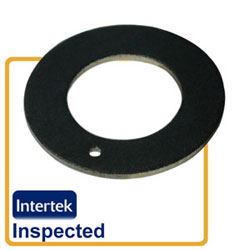
For sliding bearing applications, these coating advances translate directly into longer service intervals and reduced maintenance costs. Wrapped bronze bearings (FB090/FB092 series per DIN 1494) benefit from MoS₂-based coatings in boundary lubrication regimes common to hydraulic cylinders and construction machinery. PTFE-lined DU composite bushings compliant with ISO 3547 can leverage polymer-based top layers to extend dry-running PV limits beyond the typical 2.8 N/mm²·m/s threshold. Graphite-plugged JDB bearings already incorporate solid lubricant principles at the macro scale — tribological coatings apply the same logic at the micro scale, filling surface asperities with low-shear materials to maintain hydrodynamic film stability under start-stop conditions.
Real-world validation underscores the commercial impact. Research published in Materials (2025, DOI: 10.3390/ma18184251) by Piotrowska et al. at Kielce University of Technology tested a-C:H DLC coatings on 100Cr6 bearing steel in both laboratory and field conditions. In technically dry friction, DLC reduced the friction coefficient from 0.70 to 0.15 and volumetric wear rate by 87%. At an aggregate mining plant, DLC-coated SKF 1217 K self-aligning bearings operated for 18 months versus 6 months for uncoated units — a threefold life extension. With PFAS regulations reshaping PTFE coating formulations and EV adoption pushing demand for maintenance-free bearing surfaces, tribological coating technology will remain central to sliding bearing design through the decade.