

DU PTFE Self-Lubricating Bushings for Chassis and Steering
DU metal-polymer bushings solve a persistent problem in car chassis and steering systems: pivot points that must run dry, quiet and maintenance-free for the life of the vehicle. The DU construction, a steel backing, a porous bronze sinter layer and a PTFE overlay, delivers dry friction of 0.02 to 0.06 after run-in, which is why it appears in control arms, suspension links, steering knuckles and steering column assemblies.
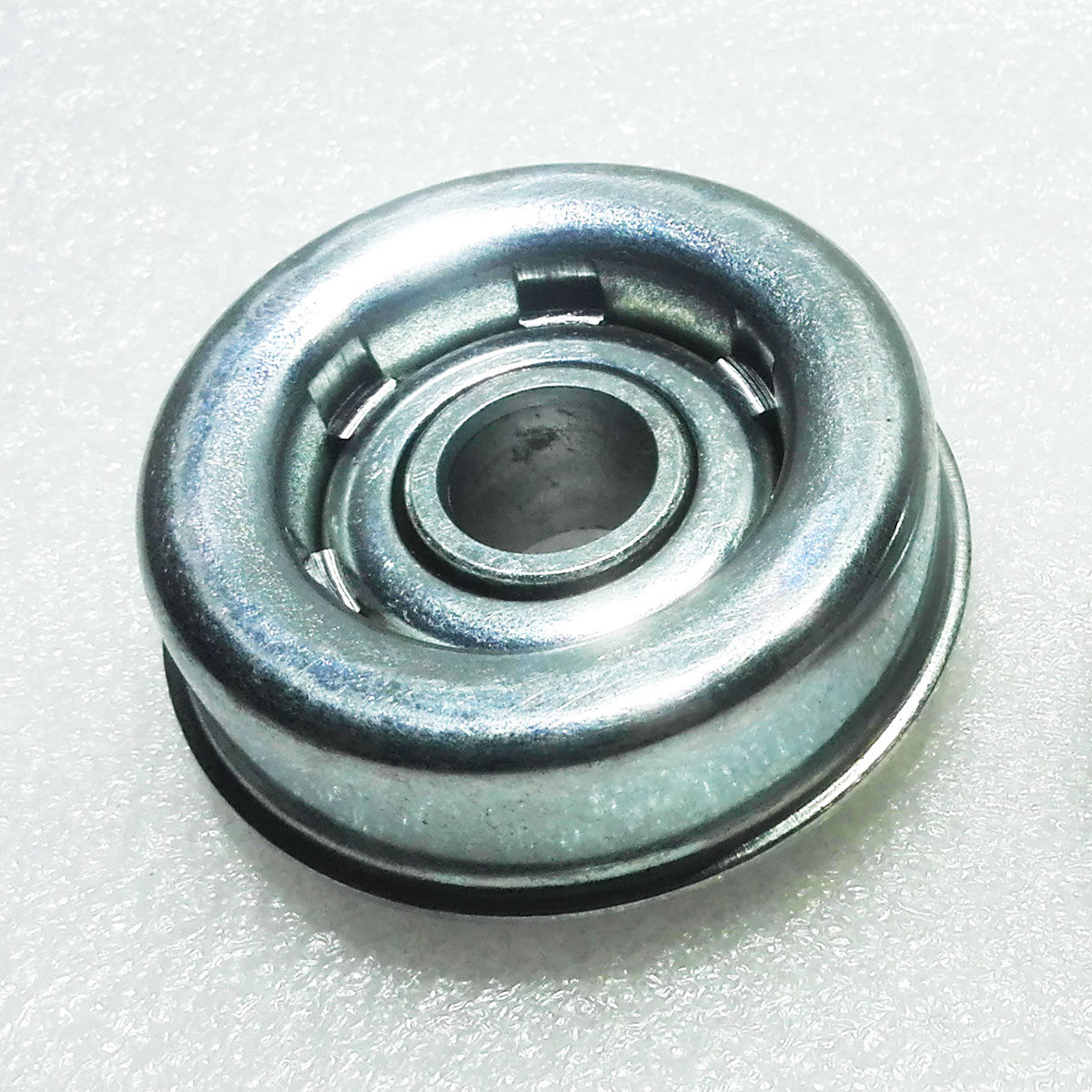
The three-layer structure behind the low friction
ISK Bearings, a Taiwan-based bearing manufacturer, describes the DU design as three bonded layers: a steel backing for structural support, a porous bronze interlayer that holds and distributes the lubricant, and a PTFE lining that forms the sliding surface. During the run-in phase the PTFE transfers onto the shaft, creating a solid film that eliminates metal-to-metal contact. The letters DU stand for dry and unlubricated, and the family includes flanged, split, thrust washer and half-bushing forms.
According to GGB, the original developer of the DU bearing, the intermittent PV limit is 3.6 N/mm²·m/s and the continuous limit is 1.8, with static load capacity of 250 N/mm² and a temperature range of -200°C to +280°C. Those numbers comfortably cover chassis loads, which typically stay below 50 N/mm² even in control arm pivots.
Where DU bushings earn their place
Steering racks and columns are natural fits. A steering rack bushing reduces friction between the rack and pinion, and because a PTFE liner runs dry there is no grease to thin out, wash away or attract grit. The result is lower steering effort and less stick-slip noise, the squeak that plagues greased spline and column interfaces.
AutoPartsAlive, an automotive parts sourcing platform, cites a European OEM case where replacing rubber bushings with bronze self-lubricating bushings in front control arms cut bushing-related warranty claims by 50% and stretched the service interval from 60,000 km to 150,000 km. The same guide puts typical automotive service life for self-lubricating bushings at 50,000 to 200,000 km.
- Control arm and suspension link pivots
- Steering knuckle bushings and rack mounts
- Steering column and spline interfaces
- Stabilizer bar links and tie rod pivots
Cost math that favors dry running
MYWAY Bushing, an IATF 16949 certified manufacturer, calculates that a self-lubricating bushing costs 20-30% more upfront but cuts long-term maintenance cost by more than 50%, and in excavator linkage applications saves about 30% of annual maintenance spend. In dusty conditions, which describes most road environments, tests show the wear rate of self-lubricating bushings runs 40% lower than traditional bushings.
How to choose a DU bushing for a steering application
Compare the duty point against the PV limit, and check the mating shaft finish. GGB recommends a shaft roughness of Ra ≤ 0.4 µm for best wear life. One warning: DU is designed for dry running, so do not specify grease lubrication under dynamic loads, since EP additives can attack the PTFE overlay.
Ahcell supplies the full DU range, including the DU-F flanged bushing for combined radial and axial loads, the DU-W thrust washer for steering column axial support, and stainless-backed DU-S for corrosion-exposed chassis positions. The series follows the MIL-B-81934 test standard for metal-backed PTFE-lined bearings, so aerospace-grade wear behavior carries straight into automotive use.
- Pre:No Information
- Next:JDB Graphite Bronze Bushings for Injection Molding Dies 2026/9/14