

Self-Lubricating Bushings Market Reaches $6.27B by 2034
The global self-lubricating bearings market, valued at USD 3.76 billion in 2024, is projected to reach USD 6.27 billion by 2034 at a 5.3% CAGR according to GM Insights. Within this market, the bushings sub-segment alone generated approximately USD 1.24 billion in 2024 and is expected to grow above 5.6% annually. Automotive applications dominate with 41.1% market share, while the automotive-specific self-lubricating bearing segment is expanding even faster at 8.0% CAGR, from USD 1.5 billion in 2024 to USD 3.2 billion by 2034 per Emergen Research.
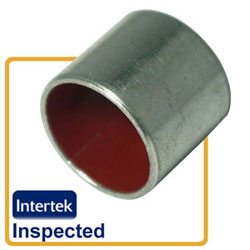
Self-lubricating bushings operate without external grease or oil by releasing embedded solid lubricants during motion. PTFE-lined composite bushings, for instance, carry a dry PV limit of 1.8 N/mm²·m/s and an oil-lubricated PV limit of 3.6 N/mm²·m/s, with dry friction coefficients between 0.08 and 0.20. The DU series from Ahcell, built on a steel backing with bronze sinter interlayer and PTFE/MoS₂ overlay, achieves static loads up to 140 N/mm² and dry PV values of 3.6 N/mm²·m/s, operating from -195°C to +280°C without stick-slip. For higher temperature environments up to 300°C, graphite-plugged JDB cast bronze bearings using CuZn25Al6Fe3Mn3 alloy with embedded solid graphite plugs deliver static loads of 100 N/mm² and comply with ISO 4379 and DIN 1850. An important design note: PTFE-lined dry-film bushings should never be greased, as grease traps debris and forms an abrasive paste that destroys the liner.
Application demand splits across several sectors. In automotive, composite bearings are the fastest-growing product type at 10.5% CAGR, driven by EV suspension systems and electric power steering where weight reduction and maintenance-free operation are critical. Industrial machinery accounts for roughly 28% of demand, with conveyor systems and robotic arms favoring bushings that eliminate lubrication schedules in hard-to-access locations. Graphite-plugged bronze variants also serve marine and construction equipment where re-lubrication is impractical and shock loads are common. Key manufacturers shaping the market include SKF Group, GGB Bearing Technology, igus GmbH, NTN Corporation, and Saint-Gobain Performance Plastics.
Regional trends show Asia-Pacific leading growth at 5.8% CAGR, with China and India pushing industrial automation and NEV adoption. North America accounts for USD 789.46 million in 2024 revenue, while Europe follows at 5.6% CAGR driven by German EV production and the EU Green Deal. As maintenance costs represent roughly 10% of commercial fleet operating expenses per the American Transportation Research Institute, the shift toward self-lubricating bushings is expected to accelerate further through 2034.