

Bimetal Bushing Selection: SAE 792 vs SAE 797 Guide 2026
2026-5-10 View:
Bimetal bushings under SAE 792 and SAE 797 standards account for a large share of steel-backed bronze bearings used in internal combustion engines, hydraulic cylinders, and heavy equipment. According to GGB's technical data for SY-series bimetal plain bearings, SAE 792 (CuPb10Sn10) achieves a static load capacity of 300 N/mm² and a dynamic load of 140 N/mm² when grease-lubricated, with a maximum PV factor of 2.8 N/mm²·m/s. These figures place SAE 792 as the workhorse material for gear bushings, transmission shafts, and track rollers where fatigue resistance under cyclic loading matters more than ultra-low friction.
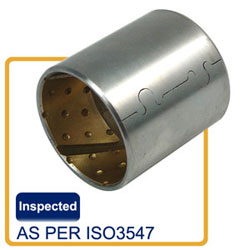
SAE 797 (CuPb24Sn4), by contrast, carries higher lead content. This gives it better anti-seizure properties and compatibility with softer shafts, making it the standard choice for diesel engine main and rod bearings. Engine Builder Magazine notes that bimetal bearings with a thick aluminum-tin overlay are "very forgiving" for light load and stock rebuilds, while tri-metal constructions with a copper-tin-lead intermediate layer handle higher power output. The JF bimetal bushing series from Ahcell follows this two-layer architecture: steel backing for structural rigidity and a sintered bronze alloy surface for sliding performance. Available in sleeve sizes from ID 10 mm to 173 mm and flanged variants up to 127 mm length, the JF series covers static loads up to 250 N/mm² and dynamic loads to 100 N/mm².
- Pre:Slide Bearings Beat Ball Guides in Dusty Plants 2026 2026/5/11
- Next:Hydraulic Cylinder Bushing Failures: Causes and Fixes 2026 2026/5/9